

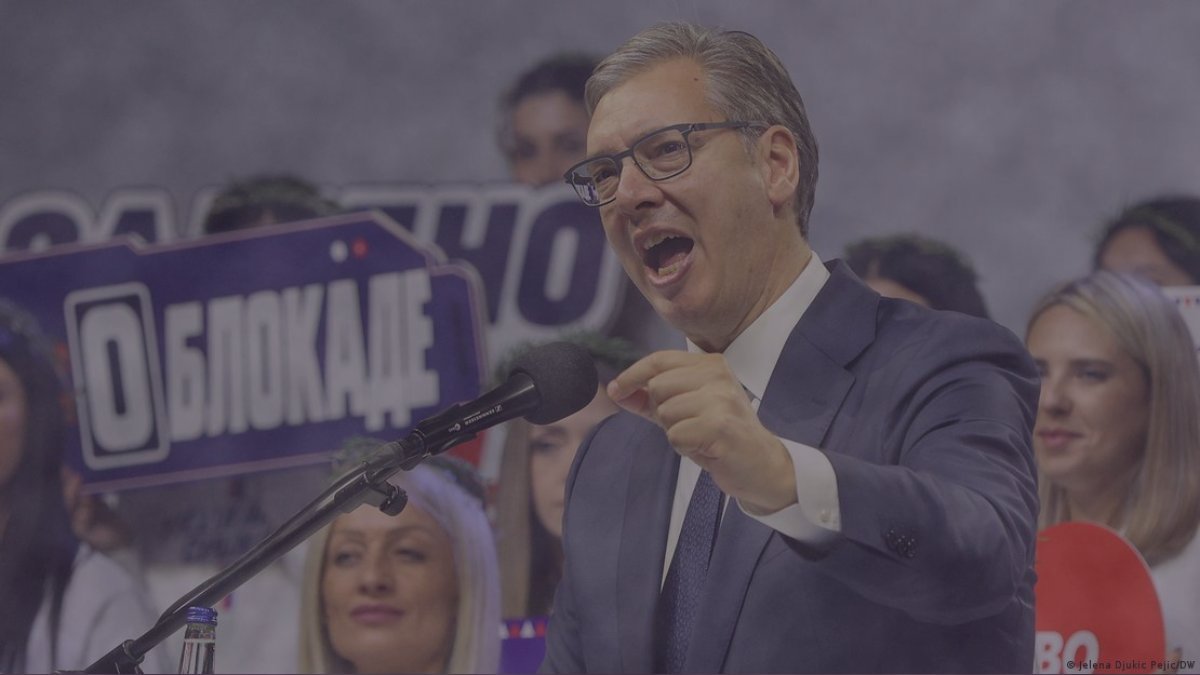
Aleksandar Vucic, Serbia’s long-serving strongman, conceded on Sunday that his Serbian Progressive Party had lost a parliamentary election to a student-led bloc — a result that ends more than ten years of SNS dominance and elevates a movement forged during almost two years of street protests. The vote drew unusually heavy participation and rising tension and was treated as a face-off between the Balkan state’s established leader and a broad alliance of university students and others who had campaigned against his government. Surveys before the ballot had indicated a close race between the SNS and the new, youth-backed Students’ List, which emerged from mass student demonstrations. Vucic acknowledged defeat at party headquarters in Belgrade, and celebrations quickly spread through the capital.
- Key Point: Vucic told SNS supporters that sample data showed his side had lost, after he resigned the presidency last month to campaign for prime minister.
- Key Point: The Students’ List traces its rise to anger over the 2024 collapse of a railway station canopy in Novi Sad, which killed 16 people and fueled allegations of corruption and weak accountability.
- Key Point: Participation was far above the last parliamentary contest: 41.1% had voted by 1 p.m., compared with 26.6% at the same point in December 2023, according to the CRTA monitor.
- Key Point: The election is being watched closely in Europe because Serbia is an EU candidate whose accession has been slowed by concerns over democratic governance and legal standards, while Vucic has kept close ties with Russia.
A defeat conceded, then a city celebrates
At SNS headquarters, Vucic did not dispute the outcome.
Based on a stratified sample, it is clear that we lost these elections,
he said. The admission ended a political run that began when the SNS prevailed in the 2012 parliamentary vote and continued as Vucic became prime minister in 2014 and president in 2017. Last month he called snap elections, stepped down from the presidency and ran for the premiership; his second term as president was set to end in May 2027, and the constitution barred him from a third. Opponents have accused him of centralizing power, damaging independent outlets and eroding democratic institutions, charges he and his party reject.
As soon as the concession was known, Belgrade erupted. Drivers pressed their horns, people gathered to party outside the election commission, and at the Students’ List headquarters backers wept, embraced and chanted
Victory! Victory!
The mood was a sharp turn from a campaign that had pitted the governing apparatus against a movement that presented itself as an alternative both to the SNS and to Serbia’s established opposition.
From Novi Sad’s grief to a national movement
The movement’s origin lies in Novi Sad, where a canopy at the railway station gave way in 2024, killing 16 people. The deaths produced widespread outrage over alleged graft, poor construction and a failure to hold anyone accountable for public works; the authorities have rejected those accusations. Protesters said corruption and political favoritism had eroded public safety. The disaster and the scandals that followed became central to the campaign. What started with university students blocking roads and marching soon attracted teachers, farmers and other parts of society, transforming a demand for justice into a wider challenge to Vucic’s hold on power. The demonstrations became larger than any Serbia had seen since Slobodan Milosevic was ousted in 2000.
Ilija Srdanovic, a cardiologist, heads the Students’ List, though he neither leads the movement nor serves as its candidate for prime minister. After voting in Novi Sad, he said:
I hope that today will pass in a democratic atmosphere, in peace, and that we will legitimately elect a new government in Serbia.
Earlier, after casting his ballot at a kindergarten on Belgrade’s outskirts, Vucic said he wanted a smooth process.
We will heed the democratic will of the citizens. You can win or lose an election. Either way, we will act responsibly,
he said, adding that he was seeking the premiership.
Record turnout and a European audience
Turnout was the story of the day. CRTA, an independent monitor, said 41.1% of eligible voters had cast ballots by 1 p.m. local time (1200 GMT), up from 26.6% at the equivalent stage of the December 2023 parliamentary election. Two hours before polls were to close, Branko Josipovic, director of Serbia’s statistics office, told a press conference:
64.89 percent out of the total
had voted by 6 p.m. (1700 GMT). Polls were due to close at 8 p.m. local time, or 1900 GMT.
The contest has drawn attention across Europe. Serbia is a candidate for EU membership, but its accession has been held back by worries about democratic governance and legal standards. Vucic has also preserved close relations with Russia and has not joined Western sanctions imposed over Moscow’s invasion of Ukraine. The vote falls six months after Peter Magyar won in Hungary, defeating Vucic’s ally Viktor Orban.
For Serbia, the outcome is a rupture. A leader who has shaped the country’s politics for more than a decade has accepted that the largest force will come from a movement that began on the streets and turned protest into an electoral challenge. For the Students’ List, the harder work starts now: it must show that a coalition built around demands for accountability can govern, and it must define where Serbia stands in the wider contest between the EU and Russia. The Vucic era is closing; the student movement’s governing test is only beginning.