

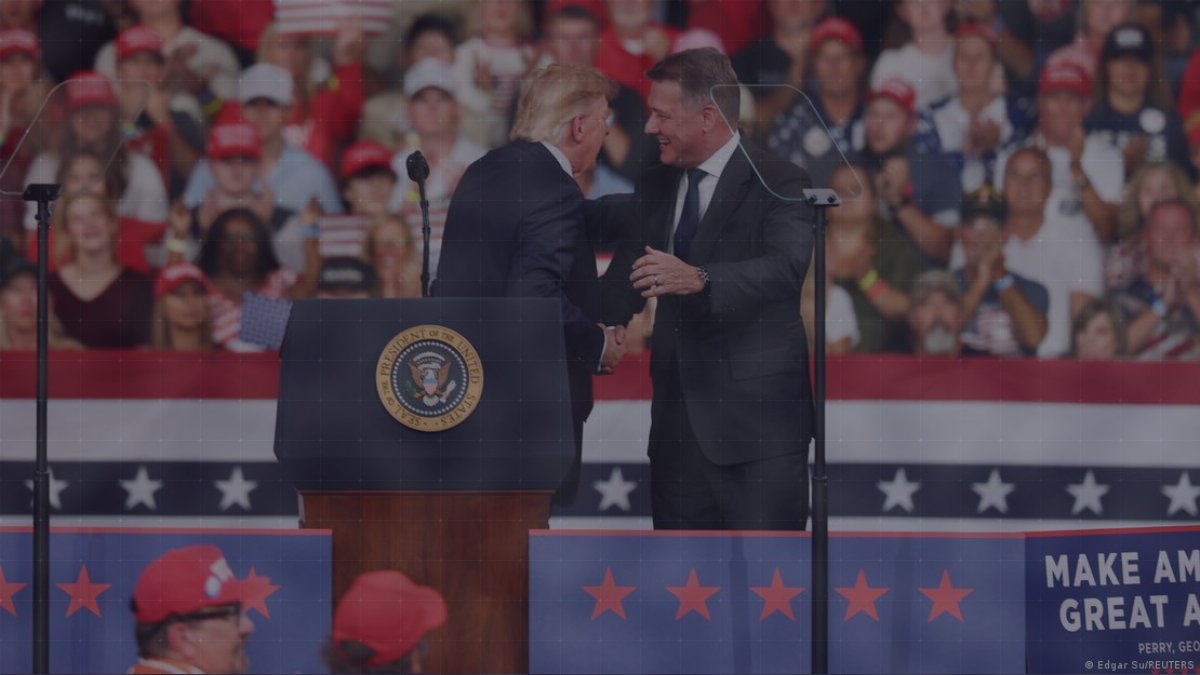
Audi has confirmed that it will build its first factory in the United States on a site near Macon, Georgia. The Volkswagen-owned brand puts the project at roughly $4 billion, or €3.6 billion, and says it should create about 4,500 jobs. Donald Trump announced the plan on Saturday at a campaign rally in Georgia — a battleground state his Republican Party views as crucial in next week’s midterm elections — with Audi chief executive Gernot Döllner beside him. The confirmation comes while German carmakers are under severe strain from Chinese competition, higher costs and two conflicts, with Volkswagen preparing to cut as many as 100,000 jobs by 2030 and Audi’s Neckarsulm plant, which employs around 15,000 people, among four German sites threatened with closure.
- Key Point: Audi intends to invest about $4 billion in the Georgia plant, hire some 4,500 workers and reach yearly capacity of up to 200,000 vehicles in the early 2030s.
- Key Point: Building starts next year; the factory will make high-end SUVs for American buyers, which Audi presents as a lasting bet on a vital premium market.
- Key Point: Trump credits his 15% levy on cars made in Europe and says the project would not have occurred otherwise.
- Key Point: The move has drawn sharp criticism in Germany, where politicians and unions fear it will deepen pressure on domestic jobs.
A plant aimed at America’s premium buyers
Audi says the Georgia site will begin construction next year and that vehicle assembly should start in the early 2030s. Output is planned at as many as 200,000 units a year. The factory will concentrate on premium SUVs for US customers. Audi described the step as a “long-term commitment” to a market it regards as crucial.
The decision lands amid a difficult period for Germany’s auto sector. Government-subsidised Chinese manufacturers have moved faster in electric vehicles and are winning market share. BMW, Mercedes-Benz and Volkswagen — the world’s second-largest automaker and Audi’s parent — have recently issued profit warnings as margins tighten, and all have announced cost cuts. Volkswagen’s planned reduction of up to 100,000 positions by 2030 and the risk hanging over Neckarsulm underline the stakes.
Trump gave his 15% tariff on European-built vehicles the credit.
“It would not have happened without tariffs.”
Audi says the outlay is about growth and resilience, not simply a reaction to trade policy. Its CEO framed the factory as part of a larger American push.
“We have much greater ambitions for Audi in America. … The United States is one of the world’s most important premium markets, and we have not yet realized our full potential. We are determined to change that … This is about building a stronger Audi business in America — not only about building a factory.”
The tariffs have nonetheless hurt. Audi, which supplies the US from Europe and Mexico, said the added expense came to roughly €1.2 billion, or $1.3 billion, in the previous year. American deliveries dropped 16% in that period, ending above 160,000 vehicles amid tough competition, after Trump ended electric-vehicle subsidies in Audi’s second-biggest market. Analysts expect a US plant to let Audi sidestep or lower the tariff burden.
Backlash in Germany
Criticism in Germany has been intense, both because of the pressure on the domestic industry and because a US factory could lead to more losses at home. Much of the anger targeted Döllner’s appearance on stage with Trump.
Isabel Cademartori, transport policy spokesperson for the centre-left Social Democratic Party (SPD), called it help for an autocrat conducting a trade war against Germany.
“This is a disgrace, especially considering the history of the Volkswagen Group,”
She was alluding to the Volkswagen Group’s association with Adolf Hitler’s Nazi party in World War II. Christiane Benner, president of IG Metall, described the rally appearance in scathing terms.
“extremely embarrassing, politically unacceptable and not worthy of the company.”
Daniela Cavallo, who leads Volkswagen’s works council, said Döllner had allowed himself to be turned
“into a puppet in [Trump’s] propaganda show.”
She added that a US plant might still make business sense because VW needs a larger share of that market. An Audi spokesperson said the investment was
“not a decision against Germany, but rather a step toward strengthening our global competitiveness.”
Manfred Döss, chair of Audi’s supervisory board, said cost cuts and efficiency alone could not protect the company’s future.
“We need the courage to invest, to seize new opportunities and to make decisions that will shape our company for decades to come.”
A midterm backdrop and an uncertain payoff
The announcement was clearly arranged around the midterm vote set for November 3, when voters will determine which party controls Congress for Trump’s final two years in office. Staging it in Georgia, a battleground state, is widely seen as an attempt to help Republican candidates there. Since Trump returned to the White House in the past year, he has relied on tariffs and political pressure to push global automakers to move production to the US. Audi follows Stellantis and Japan’s Toyota in expanding American output; Honda is discussing a new US plant, and General Motors and Ford have pledged more domestic manufacturing.
A single investment may not move many votes, but it supports one of Trump’s central pledges: restoring industrial production in the US.
For Audi, the Georgia factory is an expensive attempt to protect US sales and reduce tariff exposure while pursuing growth in a market where it has not fulfilled its ambitions. For Germany, it sharpens the contrast between investment abroad and cuts at home. The political benefit for Trump is immediate; the industrial benefit for Audi will take years to prove. Whether the plant shields German jobs or accelerates their decline is the question that will follow the project through construction and beyond.