

Six divers are working in the chill waters of the Baltic near Dahme, a little coastal town in the north of Germany, to rebuild an underwater meadow one shoot at a time. With roots left whole, conservationists lift young seagrass from a donor bed and place the plants in bags for transfer. They take only a handful from each location so the source meadow is not stripped. The destination was selected beforehand because it has sandy sediment, protection from waves and currents, and enough light and oxygen for the plants to establish. The scientists involved regard the effort as vital.
- Key Point: Scientists estimate that about 60% of seagrass meadows along the Baltic coast have been lost, but they say the decline has come to a halt.
- Key Point: These underwater beds provide food and cover for fish, crabs, shellfish and other creatures, improve water quality, soften waves, curb coastal erosion and bury carbon in the seabed far faster than forests do.
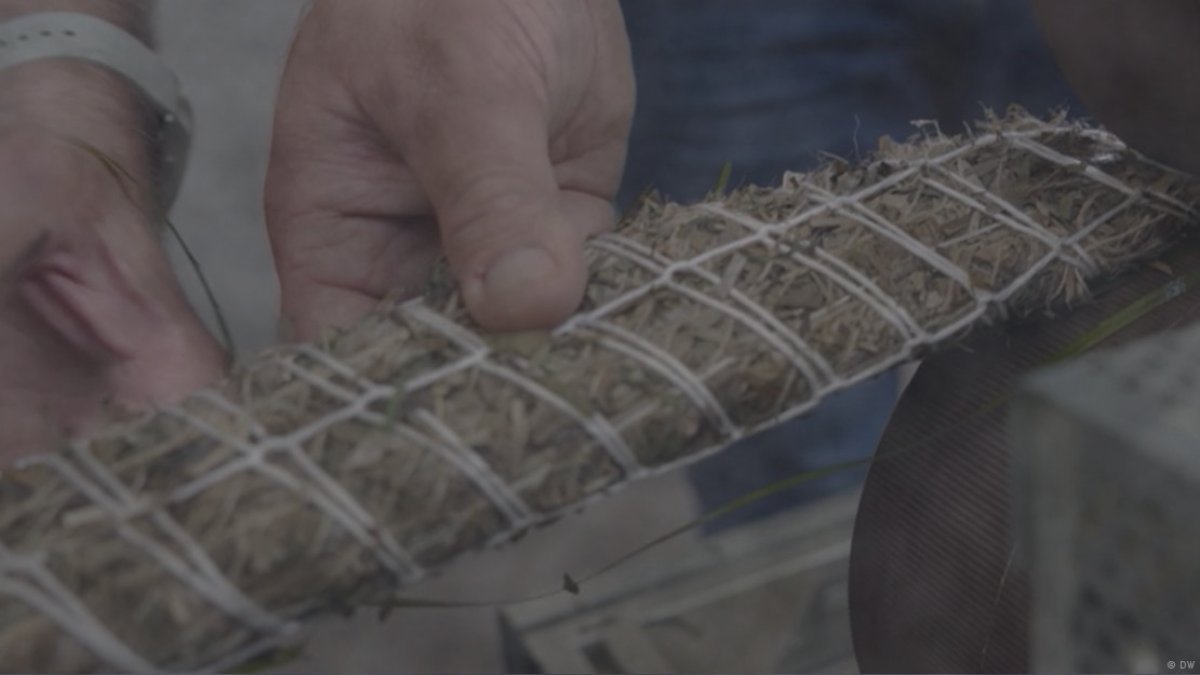
- Key Point: ZosteraTec, a startup co-founded by Reinhard Helbig, prepares seagrass strands on land and binds them with biodegradable thread so that fewer dives are needed to lay them out.
- Key Point: Researchers at GEOMAR are testing seeds as a way to restore larger areas and widen the genetic variety of new meadows.
Loss, and why the meadows count
Myriam Spicka, who leads the NGO Seagrass Conservation, has spent more than three decades diving in these waters and says she has “seen the changes.” She is not alone in noticing the damage. Thorsten Reusch, a marine ecologist at GEOMAR, the Helmholtz center for ocean research in Kiel, describes the shrinkage as the bad news.
“That’s the bad news.”
“The good news is that the decline has stopped.”
Seagrass beds supply food and refuge to fish, crabs, shellfish and numerous other creatures. They clean the water, slow incoming waves and help protect shores from erosion. In the seabed they store carbon at roughly 30 to 50 times the pace of forests.
About 70 seagrass species grow along coastlines in over 150 countries, from just under the surface down to 60 meters, nearly 200 feet. In the Baltic, the meadows rank among the sea’s richest habitats: they give wildlife cover, hold the seabed in place and work as filters that catch particles and nutrients.
Reusch notes that some countries have much more seagrass.
“Some countries have far more seagrass, particularly in the Indo-Pacific. There, it can play a major role in their carbon balance.”
Moving the hard work ashore
Planting shoots one by one is slow, delicate labor, and Reinhard Helbig wants to make it easier. His company, ZosteraTec, which he co-founded, restores marine habitats, including meadows damaged by offshore work, for example wind farm building. His work starts on the beach.
“Stormy weather helps us. Waves and currents wash seagrass out of the seabed. A day or two later, it washes up here, still fresh.”
ZosteraTec raises and multiplies the gathered shoots in its aquaculture. Several months later, the young marine plants are laid on a support. A purpose-built machine ties the strands with biodegradable thread. Those prepared strips can then be set down on the seabed, reducing the time divers spend underwater.
“We plant here on land to cut down on underwater work. That means fewer dives, and we can do the painstaking work on shore.”
Seeds and the test of time
At GEOMAR in Kiel, researchers are also testing whether seed can restore much larger areas. Esther Thomsen, a marine ecologist, dips into an aquarium tank and retrieves a pot holding seagrass.
“Ten percent of the plants in our meadows produce seeds. You can clearly see the seeds sitting inside the seed pod.”
“The big advantage of restoring meadows from seed is greater genetic diversity. And in the future, we should be able to sow seeds over much larger areas.”
Used alongside transplanted shoots, seed can help rebuild meadows. Reusch said the team currently believes the combined route is strongest.
“think the most promising way to grow meadows that can withstand climate change is to plant individual shoots as a foundation, then sow seeds between them to increase genetic diversity.”
Whether a planting works becomes clear only months or years later. Thomsen and her colleagues visit the earliest seagrass plot established in Germany’s Baltic waters, in 2021. Divers tally shoots, gauge how thickly they have spread and log the bed’s progress. They then set the results against the donor bed from which the material came. That side-by-side check is what tells them if the crop has just clung to life or is starting to behave like a natural meadow.
“We’ve just checked the seagrass meadow, and it’s really dense. We counted lots of shoots per square. It’s looking really good.”
The immediate question for the Baltic is whether these methods can move from trial plots to hectares. Hand planting has shown that seagrass can be re-established; the thread-based method attacks the cost of divers’ time, while seeding addresses the genetic narrowness of a meadow grown from a single donor. Scale remains unresolved. A monitoring visit that finds a dense bed is encouraging, but every new meadow still has to be planted and watched over for years before anyone can describe the coastline’s losses as reversed.
This account draws on a Global Us video report; Tamsin Walker edited it.