

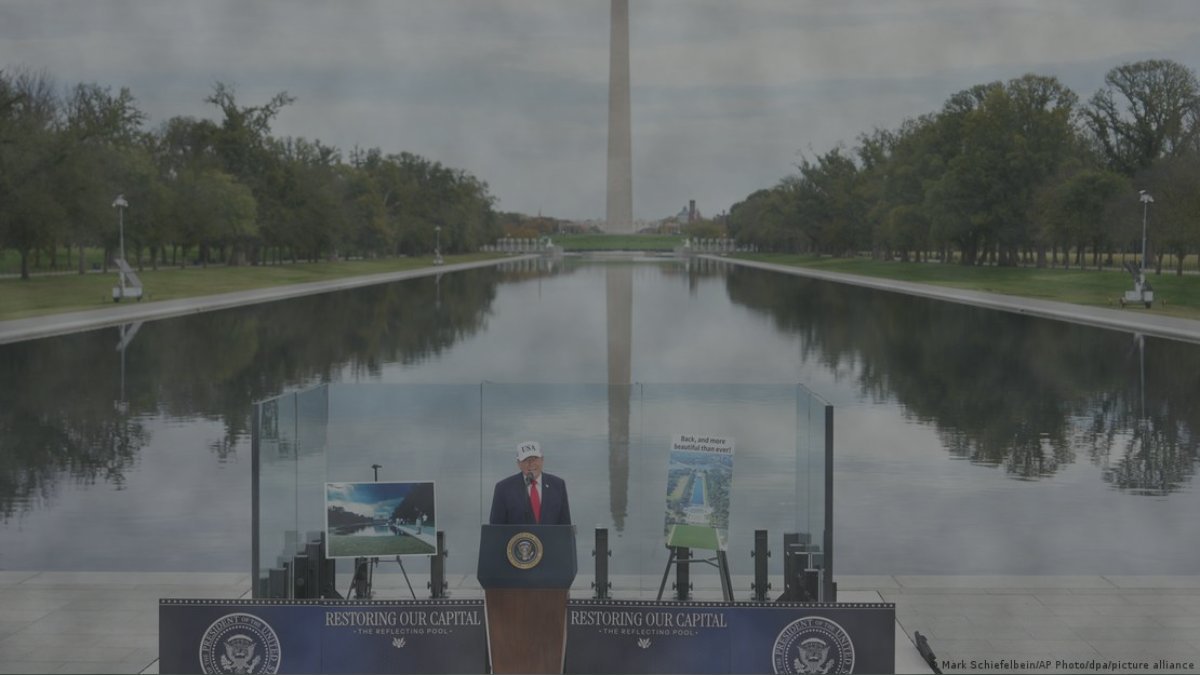
President Donald Trump used his final major rally before the November 3 midterm elections to declare the contest the most consequential of a generation, while simultaneously preparing his supporters for the possibility that Republicans could lose. Speaking at the Lincoln Memorial Reflecting Pool in Washington on Monday, Trump described the Democratic field as the most extreme in American history and conceded that history is not on his party’s side.
- Key Point: Trump called the midterms “the most important midterm, I believe, in our lifetime” and said Democrats had nominated “the most extreme and dangerous slate of candidates in American history.”
- Key Point: The president acknowledged that the sitting president’s party historically “doesn’t win the midterms,” but insisted Republicans “gave this a very strong shot.”
- Key Point: The Supreme Court rejected an emergency request from the Trump administration to force California to set aside more than 20,000 mail ballots while citizenship checks were conducted.
- Key Point: Senate Democratic leader Chuck Schumer called Trump’s closing message “pathetic,” citing the war with Iran, corruption allegations and persistent inflation.
A closing message overshadowed by the Reflecting Pool
Although the White House had billed the speech as Trump’s final pitch to voters, much of his address focused on the newly renovated Reflecting Pool and other construction projects around the capital. Standing beside a poster reading “Back, and more beautiful than ever,” the president discussed repairs to the pool, which had been closed since July after its coating peeled and algae turned the water green. He listed cleaned monuments, repaired lighting fixtures and removed homeless encampments among his administration’s achievements in the city.
Trump also touted economic figures, claiming that personal incomes are at record highs and that the poverty rate has reached an all-time low. Yet he warned that these gains would be lost if voters elected candidates he characterized as hostile to the country. “It all doesn’t matter if we’re going to be foolish and let people that hate our country win an election,” he said.
The president’s remarks about the Democratic slate were among his sharpest of the campaign. He claimed that some Democratic candidates were jihadists or members of the Muslim Brotherhood, and accused the party of pursuing a radical agenda that included open borders, tax increases, gun confiscation and the elimination of oil and gas production. He also referenced the Alaska Senate race, where Democrats allegedly recruited a candidate named Dan J. Sullivan to run against the incumbent Republican of the same name. Democratic candidate Mary Peltola has denied knowing about the reported scheme.
“The Democrat Party has nominated the most extreme and dangerous slate of candidates in American history. These are the most dangerous candidates ever put up.”
Schumer fires back as legal battle reaches Supreme Court
Senate Democratic leader Chuck Schumer responded swiftly, using his social media account to dismiss the president’s message as “pathetic.” He pointed to the ongoing war with Iran, mounting corruption controversies and inflation as the real issues facing voters.
“Donald Trump’s pathetic closing message as his illegal war rages, his corruption mounts, and the inflation he caused persists.”
The exchange came as the administration suffered a legal defeat at the Supreme Court. On Monday morning, Solicitor General D. John Sauer filed an emergency request asking the justices to require California to segregate mail ballots cast by more than 20,000 voters whom the Department of Homeland Security had identified as likely noncitizens. The administration argued that once the ballots were mixed with others, they could not be retrieved if the voters were later found ineligible.
California officials countered that the list was unreliable and could include thousands of eligible U.S. citizens, and that separating the ballots would be practically impossible with voting already underway since early October. A federal district judge, David Carter, had rejected the request last week, questioning the credibility of the administration’s allegations. “If the executive can discount votes and threaten an ongoing election due to unproven allegations, then our democracy is in danger,” Carter wrote. The Ninth Circuit Court of Appeals also declined to intervene on Friday.
By Monday evening, the Supreme Court had turned down the administration’s request without noted dissents. Justice Elena Kagan, who handles emergency appeals from the Ninth Circuit, had referred the matter to the full court.
An election framed as a referendum on Trump
Control of Congress for the remainder of Trump’s term hinges on Tuesday’s vote. Democrats are widely expected to retake the House of Representatives, while the Senate remains a toss-up. The outcome will shape both parties’ strategies ahead of the 2028 presidential race.
Trump spent the final days of the campaign on a 28-rally swing through 19 states over 25 days, concluding with events in Kansas and Iowa on Sunday. He was scheduled to hold tele-rallies from Washington on Monday. Asked whether he would consider resuming strikes on Iran after the election, Trump told reporters, “No.”
The president’s decision to devote much of his closing speech to the Reflecting Pool rather than the economy or national security drew criticism from some observers, who noted that the event was intended to be his final argument to voters. Trump, however, appeared to relish the moment, even joking that the pool might be named after him.
With voters already casting early ballots and the Supreme Court having cleared the way for California to count its mail-in votes, the midterms will test whether Trump’s warnings about Democratic radicalism resonate beyond his base. The results will also determine whether the president’s party can defy the historical pattern he himself acknowledged, or whether the 2026 election will follow the usual script of midterm losses for the incumbent’s party.