

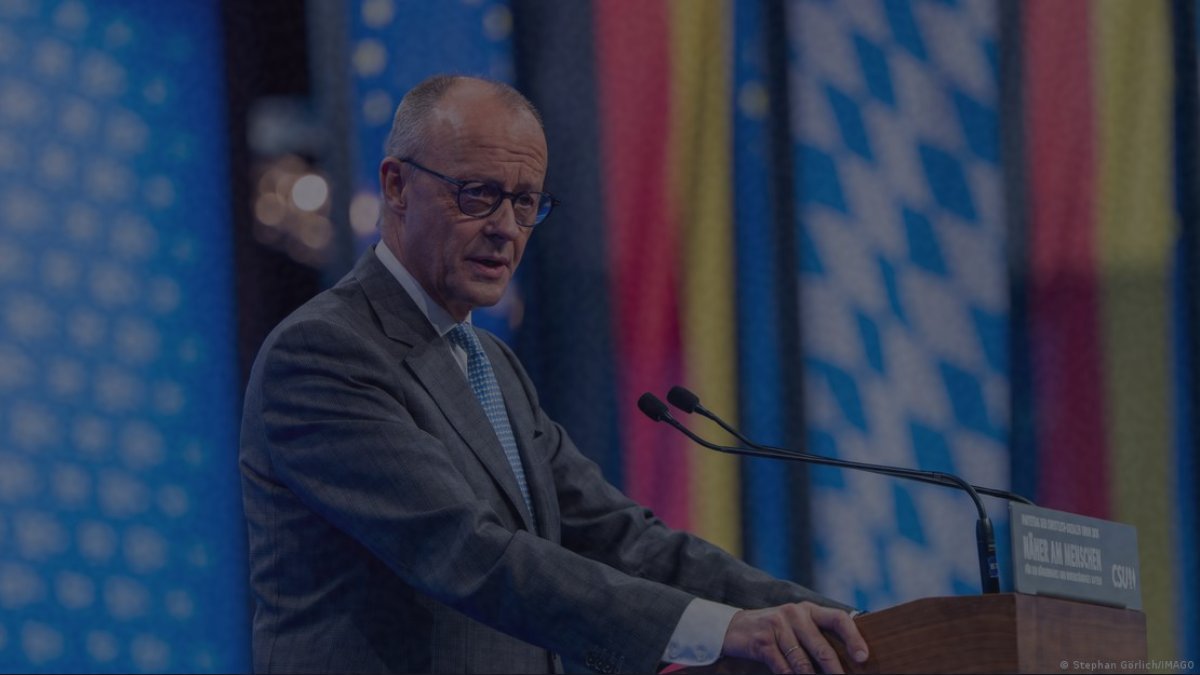
Chancellor Friedrich Merz closed the Christian Social Union’s two-day conference in Munich on Saturday by drawing two hard lines for Germany’s conservative camp — one against the far-right Alternative for Germany, the other against Moscow — while promising voters cheaper electricity and quicker delivery of his coalition’s reforms.
The speech landed at a difficult moment. The AfD leads national polling, the coalition is still absorbing defeats in eastern Germany — where the far right finished first in two states and the Left Party topped the vote in Berlin — and Merz’s approval ratings sit at record lows, with friction between his Christian Democrats and the Bavaria-only CSU adding to the pressure.
- Key Point: Merz ruled out any cooperation with the AfD and said conservatives who vote for the party have no place in the CDU/CSU alliance.
- Key Point: He described Russia as a massive threat, pointing to cyber intrusions, sabotage and a drone carrying explosives found near a Ukrainian cargo aircraft at Leipzig airport on August 4.
- Key Point: He pressed for an electricity tax cut next year and for rapid enactment of the pension, tax and welfare package launched in July.
- Key Point: He stayed silent on the CSU’s presidential candidate Ilse Aigner, leaving the succession to Frank-Walter Steinmeier unresolved.
Firewall restated as the AfD leads the polls
Before roughly 700 delegates in a Munich exhibition hall, Merz rejected appeals from parts of his own camp to reconsider the party’s isolation of the AfD. Anyone who casts a ballot for the far right, he said, forfeits a place in the conservative alliance.
“Anyone who feels they have to vote for these people has no place in our Union. They have no place amongst us.”
He called radicals at both ends of the spectrum a “bitter adversary” for his side and argued the two sister parties must hold together more tightly than ever so that Germany is not left to extremist forces. On who should lead the conservatives next, he was blunt.
“No one has an exclusive claim to the chancellorship.”
Merz praised CSU leader Markus Söder as a strong voice for Bavaria and for Germany, and credited the Bavarian ministers serving in his cabinet — a gesture toward a partner that has viewed his Berlin record with scepticism. He entered to a Bavarian brass band playing “The Eye of the Tiger” and received a standing ovation lasting nearly four minutes.
He also warned the Social Democrats and the Greens against building a coalition in Berlin with the Left Party, which he accuses of tolerating antisemitism. The Left Party rejects the charge that antisemitism is systemic in its ranks.
Leipzig drone case anchors the Russia warning
Security dominated the address. Merz said Europe faced dangers from domestic extremists and foreign powers at once, and accused the Kremlin of working to destabilise Germany “day in and day out” through cyber intrusions, sabotage and plots against critical infrastructure. He cited an incident at Leipzig airport on August 4, when a drone carrying explosives was found close to a Ukrainian cargo aircraft. German officials blame Moscow; the Kremlin denies running a hybrid campaign against Germany and its neighbours.
“We are facing a massive threat in the east of our continent. Russia’s war of aggression against Ukraine has profoundly shaken the European peace order.”
His assessment echoed Martin Jaeger, head of Germany’s foreign intelligence service, who told a parliamentary panel on October 5 that the confrontation had entered a more dangerous phase.
“Germany is in danger of becoming embroiled in a violent conflict with Russia. The attempted attack in Leipzig is only one example of that.”
Jaeger also said no other country posed such a direct, comprehensive and concrete threat to Germany. Two days before the conference, police in Brandenburg detained a Ukrainian national suspected of working for Russian intelligence, with investigators focused on information deemed militarily relevant.
Electricity tax pledge meets budget caution
Merz renewed his promise of cheaper power for households and businesses next year. Berlin has pledged to press the electricity tax down to the European Union’s minimum quickly, but relief has so far reached only manufacturers, farmers and forestry operators.
“If it’s possible — and I think it is — then the electricity tax must be lowered next year.”
That pledge sits awkwardly with the budget picture drawn by Finance Minister Lars Klingbeil, who has warned the government has little fiscal room even as tax revenue is forecast to rise. Merz also demanded fast progress on the pension, tax and welfare overhaul begun in July, putting the burden of delivery on the Social Democrats.
“We will be judged on whether we have succeeded in putting these reforms into practice.”
Presidential succession left unanswered
One question Merz left untouched was who should follow Frank-Walter Steinmeier, whose term as federal president ends next year. The CSU has put forward Ilse Aigner, who presides over the Bavarian state parliament, and delegates applauded loudly when her name was raised. The CDU has not endorsed her and has not given up the idea of a candidate of its own.
Two unrelated security cases surfaced around the conference. Federal prosecutors said a 21-year-old German citizen was held on suspicion of trying to join Islamic State abroad: he allegedly left Berlin for Ethiopia in January 2025 intending to reach Somalia, later got to Pakistan and was taken into custody there in February 2025. Bavarian authorities reported a fire late on Friday at the Kehlsteinhaus, the mountain retreat known as the Eagle’s Nest, and said a suspect was in custody.
None of that applause resolves what follows Merz back to Berlin: an unresolved presidential succession, a reform timetable that depends on his coalition partner, and an AfD still ahead in the polls. The harder test is whether household power bills actually fall next year, and whether voters credit his coalition rather than its rivals for the relief.