

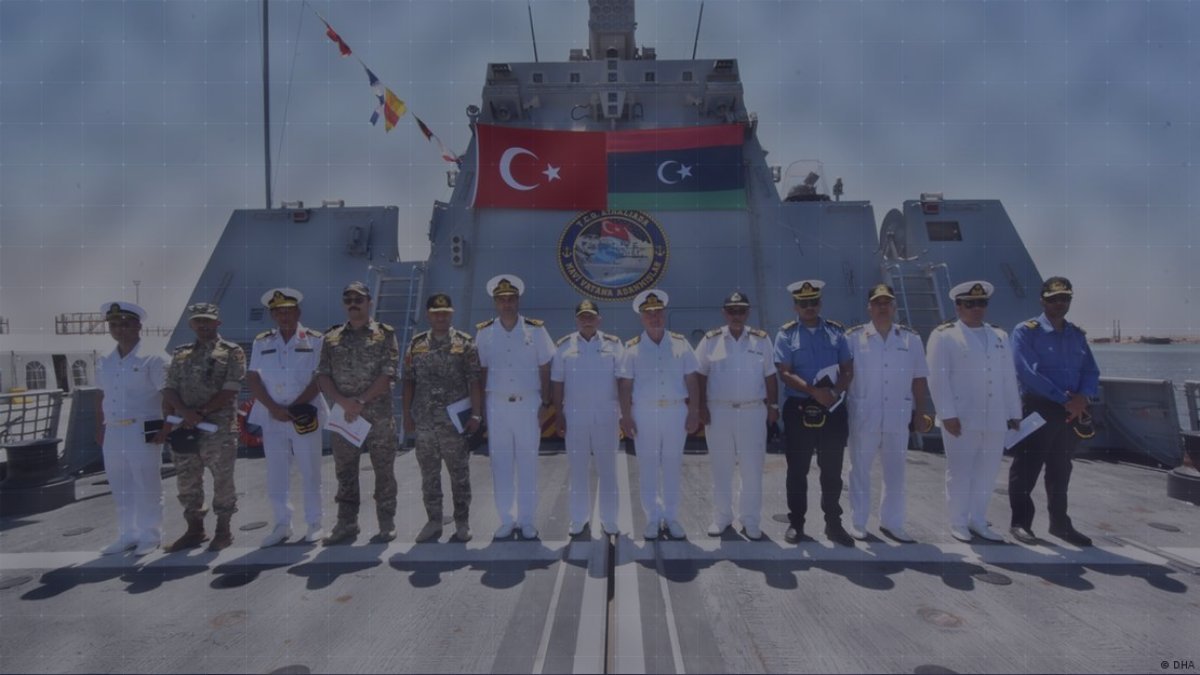
The parliament seated in eastern Libya voted unanimously on Tuesday to endorse a maritime pact with Turkey, overturning its own earlier refusal and opening the way for an economic sea corridor linking the two countries. Turkey’s Foreign Ministry welcomed the outcome. The vote means Ankara now has approval from both Libyan administrations for an arrangement it first struck in 2019 with the Government of National Accord, the UN-recognised administration in western Libya. It also makes a clash with other eastern Mediterranean states more likely, especially with Greece.
- Key Point: The chamber’s ballot removes eastern Libya’s old objection to the 2019 memorandum and leaves both rival Libyan camps backing the deal.
- Key Point: The corridor would stretch from Turkey’s southern shoreline to Libya’s northern shoreline, through waters that Greece ties to Crete, Karpathos and Rhodes.
- Key Point: Athens and the European Union regard the arrangement as void; Ankara says the Mediterranean’s geography should carry more weight in any boundary.
- Key Point: The accord could obstruct the planned EastMed gas pipeline and any cable or pipe project on the shelf Turkey claims.
What the vote changes
The memorandum sets up a sea route between Turkey’s southern coast and Libya’s northern coast. The area has attracted attention because large oil and gas deposits were found there in recent years; estimates suggest gas reserves worth hundreds of billions of US dollars may lie under the seabed. Turkey and Libya say they want to protect their economic claims to those resources and to tap them jointly. The planned corridor, however, crosses waters Greece considers part of its exclusive economic zone around islands including Crete, Karpathos and Rhodes.
Greece’s Foreign Ministry said on X that Athens firmly rejects the agreement and that the European Union supports its position. The ministry repeated the EU’s assessment in a post:
The European Union has described the Turkish-Libyan memorandum as null and void, stressing that it violates the sovereign rights of third states and is not consistent with the Law of the Sea.
Kaja Kallas, who handles foreign affairs and security policy for the EU, echoed that view on X:
I raised yesterday’s Libyan vote on a maritime MoU with Türkiye and stressed that it infringes upon the sovereign rights of third states.
The legal quarrel
The core dispute is whose claims international law supports. Athens relies chiefly on UNCLOS, the UN sea-law treaty. Article 121 says that inhabited islands able to sustain their own economic life may claim an EEZ on par with a mainland. Greece applies that rule to Crete, Rhodes and Lesbos. Athens also cites a 2022 judgment at the International Court of Justice, which found that Colombia had breached Nicaragua’s sovereign rights by allowing fishing inside Nicaragua’s EEZ. The court said overlapping interests require a fair demarcation that weighs coastlines, geographic conditions and the consequences of a proposed boundary.
Ankara rejects that approach. It argues that Mediterranean geography is exceptional: if every small Greek island near Turkey and Cyprus were given a full EEZ, Turkey would be left largely without access to the open sea. That factor, in Turkey’s view, deserves greater weight when the line is drawn. Turkey never signed UNCLOS, so it does not accept that a UN arbitration tribunal should hear the dispute. Even specialists in the law of the sea disagree about what an equitable division would mean in this case.
Hifter’s reversal, business ties and the pipeline
The reversal reflects a wider shift. When Turkey promoted the agreement in 2019, Libya was still in civil war. Turkish forces intervened in the west on behalf of the Tripoli government and helped repel an offensive by eastern commander General Khalifa Hifter. Hifter had opposed the deal for years before changing course. Since then, Ankara has conducted a charm offensive that appears to have produced a political opening with Hifter and his camp. Turkey now says it has beneficial ties with both sides of Libya.
Commercial and military links have grown alongside the diplomacy. Turkish builders have obtained reconstruction contracts valued in the billions over the past few years. TPAO, the state oil firm, and the Libyan National Oil Corporation have already drawn up joint seismic-survey plans for waters off Libya. Ankara has also become a new arms supplier and trainer for Hifter’s troops, furnishing weaponry and running training programs. That posture counters Egyptian and Russian leverage in the east and bolsters Ankara’s standing as a regional geopolitical actor.
With the eastern parliament’s approval, eastern Libya also hopes to secure a share of the valuable natural resources. That could raise Hifter’s international standing. It also makes escalation more likely, especially if the two states start pulling hydrocarbons from the disputed waters. The deal threatens the EastMed pipeline, a planned route that would carry Israeli and Cypriot gas through Greece and contribute to EU energy security; the Turkey-Libya corridor cuts across the path it would take. Ankara has argued that any cable or pipeline on the continental shelf it claims needs Turkish consent.
The longer-term risk is a Mediterranean divided into two competing energy and defense camps, with the Turkey-Libya axis on one side. Whether that split hardens depends on whether extraction starts and on how far the EU turns its objection into action. For now, the vote has converted a once-rejected memorandum into a project endorsed by both Libyan camps — and a new test for Greece, Turkey and their partners.