

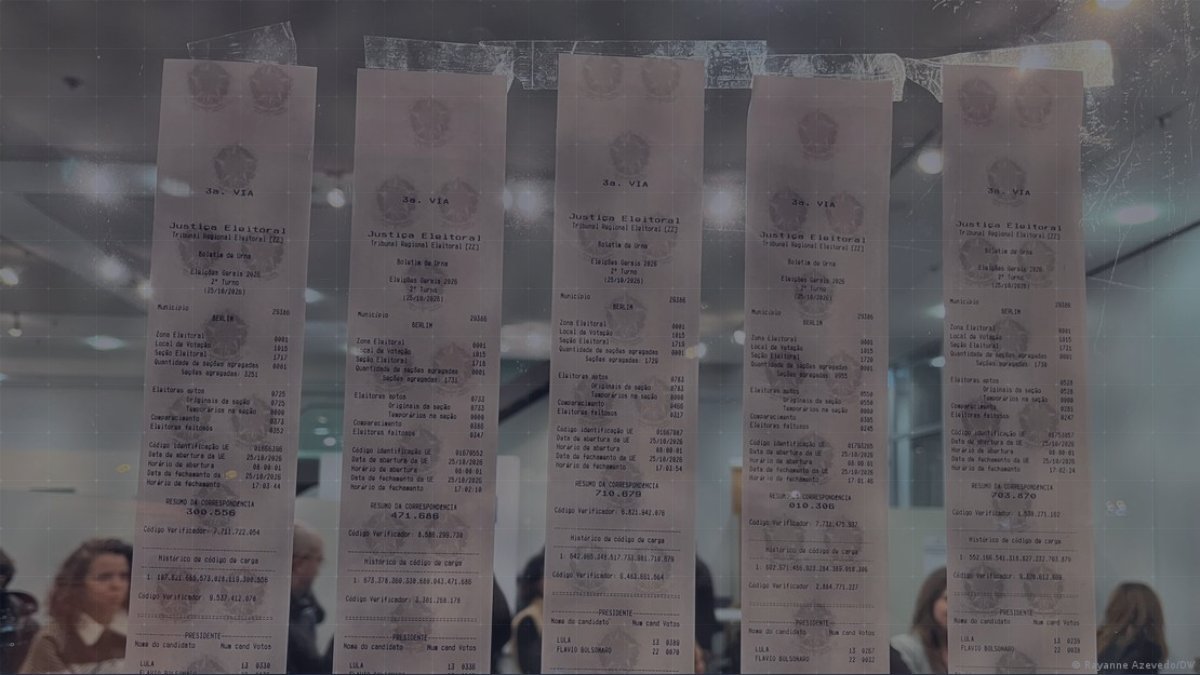
Brazilian election workers started tallying ballots on Sunday, October 25, 2026, after polls closed in a presidential contest that the country’s electronic voting system could resolve in a few hours. Even with that speed, the final margin was widely expected to be narrow. DW’s infographic tracked the standings. The Supreme Court stretched voting to 7 p.m. local time, or 2200 GMT, adding two hours, after Lula’s side said reduced bus service had stopped people from reaching polling places and Bolsonaro’s campaign cited weather problems in some areas. Lula had sought extra time after buses were withdrawn in São Paulo. Results from voters in Germany gave Lula a large majority, while the count’s pace and both camps’ readiness to accept it remained the central issues.
- Key Point: The Supreme Court added two hours, moving the deadline to 7 p.m. local (2200 GMT), after requests from both campaigns.
- Key Point: Lula said 40% of São Paulo’s buses were held out of service, matching local reports that 75 buses could not leave their garages, and asked the court to let affected voters cast ballots.
- Key Point: In Germany, Lula took 79.09% of 20,923 ballots, up from 71.9% in the first round; Berlin gave him 88.77%, while Frankfurt was Bolsonaro’s best city at 29.03%.
- Key Point: Trump has not endorsed anyone but is close to the Bolsonaro family; Lula cast himself as a barrier to US interference.
Extended hours follow competing complaints
The court acted as the original closing time approached. Its ruling allowed voters to remain until 7 p.m. local, or 2200 GMT, a two-hour addition. Lula’s campaign had argued that cuts to public bus service kept residents from polling stations. Bolsonaro’s team made its own case, saying bad weather in some areas made turnout harder.
Before the decision, Lula said São Paulo, Brazil’s biggest city, had seen buses pulled from service, and that many residents were unable to vote. He said 40% of buses there had been prevented from entering service, a figure that local media reports matched when they said 75 buses could not leave their garages. He urged the Supreme Court to lengthen the voting period so people effectively barred by mayors’ dirty tactics could still vote.
We are asking the Supreme Court to extend the electoral process so that those who were effectively barred from voting, due to the dirty tactics of mayors, can still cast their votes.
Lula said he had never before raised a complaint about an election and called what was happening abominable.
I’ve never complained about anything in any election before. Whether I won or lost, I’d just accept it and get ready for the next one. But this time, something abominable is happening.
He also told voters not to abandon the ballot.
No one should give up on voting just because some scoundrel of a business owner or some crooked, criminal mayor tried to stop the people from casting their ballots.
German ballots and the campaign’s public face
Figures from Brazilian diplomatic missions in Berlin, Munich, Hamburg, Frankfurt and Cologne, seen by DW’s Portuguese service, showed Lula winning 79.09% of the 20,923 votes cast in Germany. That was higher than his 71.9% share in the first round. Berlin was his strongest city, at 88.77%. Frankfurt gave Bolsonaro his best result, but 29.03% still left him well behind. Turnout increased from 19,322 in the first round, although only about half of the 41,552 eligible voters in Germany participated in either round. Around the world, 918,900 people were eligible.
Nearly 160 million voters were called to the polls in Brazil. Clothing often signaled allegiance: red and the number 13 on the voting machine pointed to Lula, while yellow and green clothing—most visibly the national team’s soccer shirt—signaled Bolsonaro supporters, including those in Lisbon. Election organizers confronted difficult logistics in large, crowded cities such as Rio de Janeiro, where long lines were a risk, and in the Amazon, where officials loaded voting booths onto boats bound for their destinations. Soldiers were deployed because disruption could threaten the results.
Trump, the region and the meaning of a fast count
US President Donald Trump has not endorsed either candidate, but he is close to the Bolsonaro family. In his second term, Trump has intervened more often in South American politics, including a military operation aimed at ousting Venezuela’s leader, President Maduro. The elder Bolsonaro copied Trump’s rhetoric and policies and would not accept his 2022 loss to Lula; he was jailed over an attempted coup, and the case drew comparisons with Trump’s 2020 defeat by Joe Biden. Lula has portrayed himself as a shield against American meddling. After voting, he said:
The right wants to govern with the American flag.
A Bolsonaro victory would push Latin America further toward pro-US far-right leaders, following Colombia, Chile and Peru.
Brazil’s electronic system makes a result possible within hours, though the race was expected to be close. Kassio Nunes Marques said a quick outcome is routine in Brazil. He called it the pattern in
practically all elections
in the country.
Because the result was expected to be tight, the late extension and the dueling complaints were likely to keep attention fixed on how quickly the count could be finished and whether both sides would accept it. A Bolsonaro win would move Latin America further toward the pro-US right; a Lula win would keep Brazil under its left-wing incumbent. The speed of the count was set to influence not only who takes power but whether the result is accepted.