

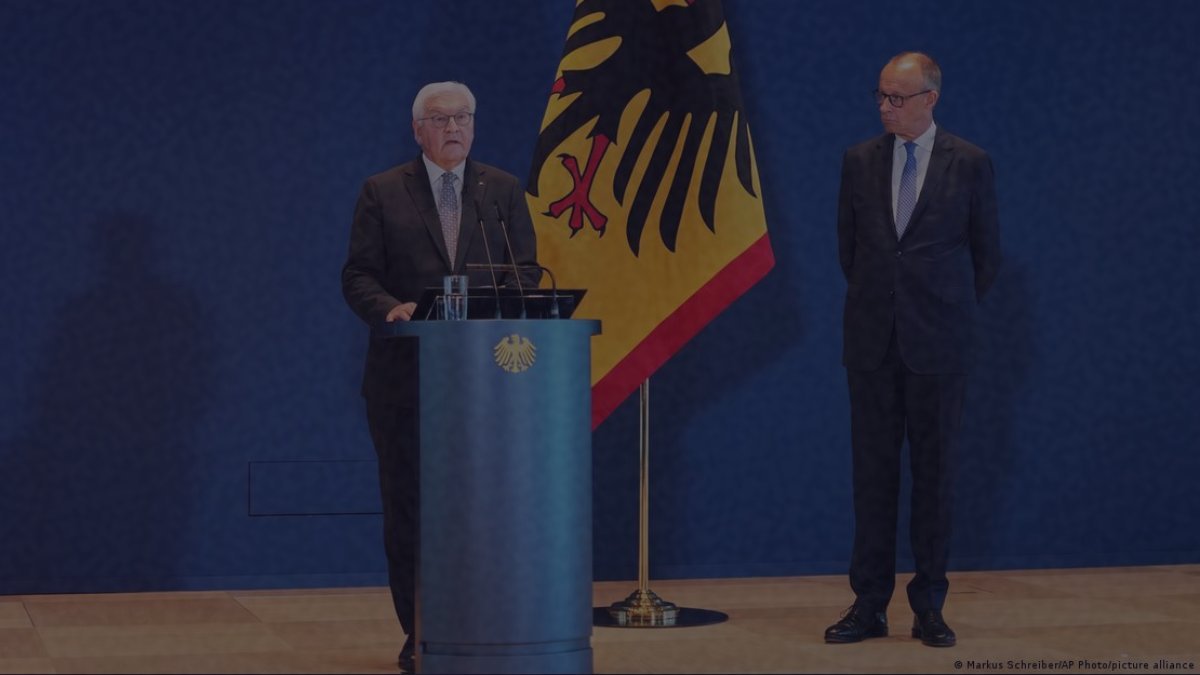
Frank-Walter Steinmeier is making his first journey to China in eight years, a five-day visit that places him in Beijing while Germany tries to protect an economic relationship it still needs and simultaneously limit the dangers that come with it. His programme includes cultural exchange and a stop at a Volkswagen factory in Hefei before he finishes in the capital, where he is scheduled to see Xi Jinping, Premier Li Qiang and Zhao Leji, the National People’s Congress chairman. The timing is notable: the Chinese Communist Party is holding a Central Committee plenary session, a large annual gathering that foreign visitors typically schedule around rather than coincide with.
- Key Point: Steinmeier’s five-day China trip is his first in eight years and ends with meetings with Xi, Li Qiang and Zhao Leji.
- Key Point: His itinerary combines cultural sites with a Volkswagen plant in Hefei; his office says the visit concerns Germany’s complex and varied relationship with China and its difficulties.
- Key Point: While Steinmeier is in China, Chancellor Friedrich Merz is in Japan, Singapore and South Korea with business figures, concentrating on competitiveness, technological change, defense ties and critical raw materials.
- Key Point: Mikko Huotari, who leads the China Institute MERICS, is expected to travel with Steinmeier despite Beijing’s sanctions on the institute.
Two journeys, one signal
Steinmeier’s group draws on culture, politics and academia. Merz travels with a sizable business delegation, visits firms and takes part in major economic gatherings in Tokyo and Seoul. Michael Laha, who studies China for DGAP, the Berlin-based German Council on Foreign Relations, said the chancellor is
“deliberately strengthening Germany’s partnerships in the Indo-Pacific at a time of global upheaval,”
whereas Steinmeier wants a channel to Beijing open while Berlin and Brussels adjust their China policy.
“This joint trip sends a very well-coordinated message to the Chinese that we remain committed to the partnership but at the same time are taking steps to reduce risk,”
Laha said. He described the setup as a hard balance to strike, though it lets Beijing preserve face.
The car industry shows the strain
For German carmakers, machine builders and chemical companies, China ranks among the most important markets. Yet Chinese capacity backed by the state is squeezing European producers. Berlin and Brussels also rely on China for materials and technology, and both are looking harder for other partners. The Volkswagen plant in Hefei puts Steinmeier inside that contradiction. His office said the visit centers on
“Germany’s diverse and complex relations with China, as well as the challenges involved,”
Steinmeier once championed the idea that tighter trade would gradually push authoritarian partners toward openness — a doctrine now widely treated as a failure. This time he is expected to carry the tougher European stance, including a recent agreement among European leaders to scale back imports of Chinese-made plug-in hybrid vehicles.
“That was a concrete step, but it can only be the beginning,”
Laha said of that decision.
Sanctions, Ukraine and a speech in Beijing
Steinmeier’s travelling party underscores a different emphasis from Merz’s. Rather than executives, he brings figures from German cultural life, politics and universities. Among those expected to come is Huotari, whose institute has been sanctioned by Beijing.
“The fact that he is coming along sends a clear message to the Chinese side that we do not approve of the sanctions,”
Laha said. In 2021 the EU imposed sanctions on China for the first time since the 1989 Tiananmen Square massacre. They hit Chinese party and regional officials and an organization accused of grave human rights violations and repression of the Uyghur minority. Beijing answered with entry bans and other penalties against European politicians, scholars and bodies, MERICS included.
Laha doubts human rights will feature prominently. Steinmeier’s record on China is pragmatic: while foreign minister he put distance between himself and his predecessor Joschka Fischer, a well-known critic of Beijing, and he criticized Angela Merkel, then chancellor, for receiving the Dalai Lama.
Ukraine is a likelier subject for plain speaking. Berlin is convinced Beijing could press Moscow harder toward serious negotiations, and Laha is blunt about where China stands:
“Beijing is clearly on Moscow’s side.”
Steinmeier may spell out the argument when he speaks at Peking University on Thursday. His office says Germany has
“long viewed China’s emergence with respect and goodwill,”
while noting that the question now is less whether China rises than how it uses the power it has gained.
“If the president points out that Russia used its power to attack a sovereign state, he could be alluding to another regional connection: Taiwan,”
Laha said — an implicit appeal to Beijing to take on more responsibility for regional and international order. The visit closes in the Chinese capital with talks with Xi, a leader Steinmeier has known across almost two decades, alongside Li Qiang and Zhao Leji.
The trip marks the high point of Steinmeier’s second-term attention to Asia. China is the toughest test of whether that focus can sit alongside the harder economic line Europe has taken. The reception given to the delegation, including how Beijing treats the head of a sanctioned think tank, will indicate how much frank talk is possible. Sending the president and chancellor abroad together is Berlin’s way of saying that lowering risk differs from decoupling; keeping that distinction credible as German industry’s exposure to Chinese capacity increases will be much harder.