

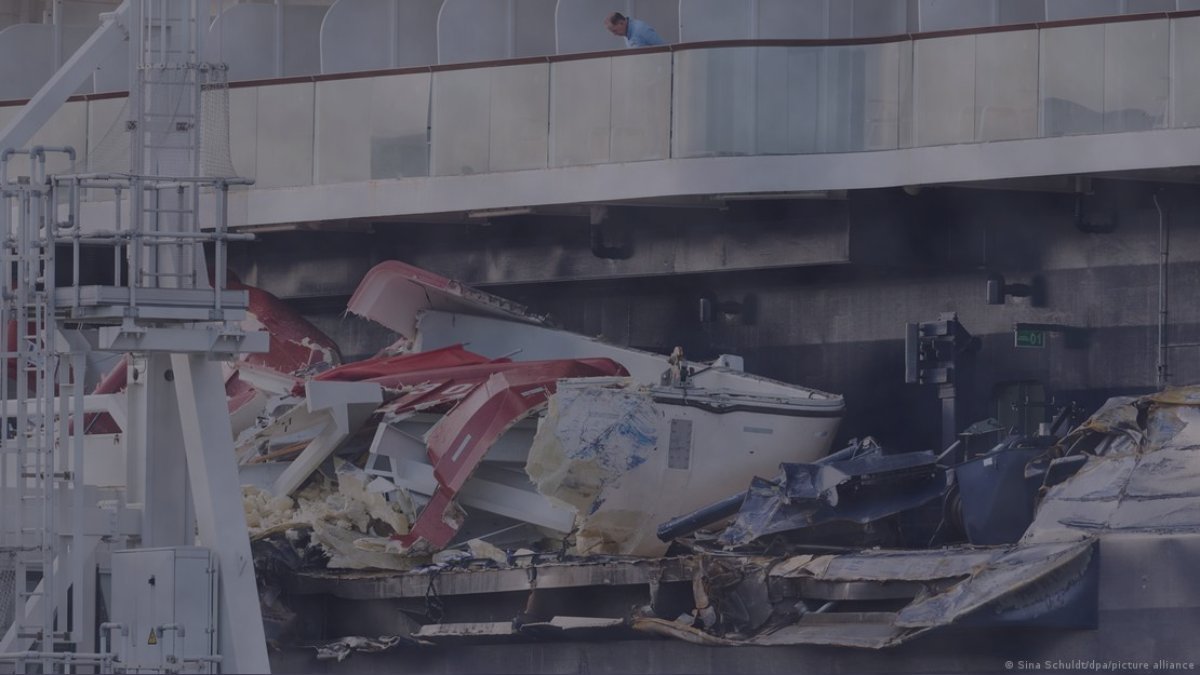
German police are looking into the conduct of the Mein Schiff 3’s captain after the TUI Cruises liner hit two container ships in Bremerhaven, a collision that produced damage put in the millions of euros and led to the scrapping of a 20-day Canary Islands trip. No one was hurt, and no vessel took on water, but the cruise ship and one cargo vessel were seriously damaged. The other container ship escaped with light harm.
- Key Point: Police have begun proceedings concerning a possible administrative offense and are trying to establish whether the captain failed in his duty of care. They have not said what suspected lapse they are examining.
- Key Point: The liner was almost fully booked and had 2,428 passengers plus 922 crew when a wind gust pushed it toward two container ships tied up in port.
- Key Point: TUI Cruises canceled the Canary Islands sailing after technical specialists came aboard and concluded that repair work in a shipyard was required.
- Key Point: Whether later cruises scheduled for this year will proceed is not yet known, although other harbor traffic was not initially affected.
Investigation Centers on the Captain’s Duty of Care
A police spokesperson said the file was opened to test whether the captain had breached his duty of care. The suspected shortcoming has not been described. RTL reported that investigators had spoken with the masters of all three vessels during the night leading into Monday. The accident happened on Sunday evening as the cruise ship was departing the northern German port with tugboat assistance. A gust of wind drove the nearly full liner toward two container vessels that were moored nearby. At the time, the Mein Schiff 3 carried 2,428 passengers and 922 crew. Nobody was injured, and none of the three ships began taking on water.
The interviews with all three masters suggest that investigators are rebuilding the departure sequence from several viewpoints. The factual account places tugboats and a gust at the center of the maneuver, but police have not tied either element to a suspected breach.
The larger container ship was badly damaged: a stretch of its port flank, several meters long, was ripped open, and its container guides were bent. The smaller container vessel had only minor damage. The liner itself suffered major harm, and images revealed harm to lifeboats and the bridge. Every damaged area sat well above the waterline, which helps explain why no vessel flooded. After the impact, the ship went back to its berth at the cruise terminal.
The location of the damage, well above the waterline, and the harm to lifeboats and the bridge fit a collision with moored vessels rather than a flooding emergency. For the container ships, the bigger one absorbed the worst of the impact, while the smaller one came away with minor harm.
Experts Find Shipyard Repairs Are Needed
Specialists inspected the vessel soon after the crash and concluded that yard work was needed, TUI Cruises said. The operator called cancellation of the Canary Islands trip “the only responsible decision,” and it said that protecting passengers and crew was its “highest priority.” At first, travelers could stay on the ship while TUI organized help. Whether later sailings scheduled for this year would proceed was still uncertain. Other port traffic was not affected at the outset. The operator’s statement put safety first but gave no resolution for the schedule.
TUI Cruises called the cancellation “the only responsible decision” and said the safety of guests and crew had “highest priority.”
What the Case Means for the Ship and Its Schedule
The practical fallout is already clear: one voyage has been canceled, the Mein Schiff 3 requires shipyard attention, and the captain is the subject of an administrative inquiry. The damage estimate in the millions of euros indicates the severity of the impact, while the lack of injuries and flooding limits the human and structural cost. The investigation will test whether the captain met the standard of care expected during a departure maneuver involving tugboats and a sudden gust. Because authorities have not identified the suspected lapse, the legal question remains broad. TUI Cruises has put safety at the top of its public statement, but the company has not resolved when the ship will sail again or how many future trips will be affected. The absence of initial disruption to other harbor traffic does not answer the commercial questions facing the operator. The report, edited by Alex Berry, leaves two central issues open: how quickly repairs can be completed and whether later voyages will proceed. For travelers booked on subsequent sailings, the key question is the ship’s return to service; for the captain, it is whether the inquiry finds that he failed in his duty. The commercial uncertainty is separate from the police inquiry, yet both weigh on the ship’s near-term future. TUI has not supplied a repair timetable, and no date has been given for a decision on later cruises. Until the yard work is finished, the operator cannot confidently confirm the next departure.