

An online campaign called "Gen Z regelt" — commonly translated as "Gen Z sorts it" — has urged supporters to take to the streets in 23 German cities this Saturday, a plan that has unsettled politicians in Berlin. The effort speaks to the cohort usually dated from 1995 to 2010, many of whose members believe earlier generations did far too little on climate change and allowed the rich-poor divide to expand. They are also anxious about schooling and about the chances that Western societies will offer them. By Tuesday, the campaign’s website had recorded roughly 134,000 people intending to attend the weekend protests; with a few days remaining, the number could climb.
- Key Point: "Gen Z regelt" used social media to call for rallies in 23 German cities on Saturday; about 134,000 sign-ups had been counted by Tuesday, and more may follow before the weekend.
- Key Point: Young participants point to insufficient climate action by their parents’ generation, a widening gap between rich and poor, and worries about education and future prospects in Western countries.
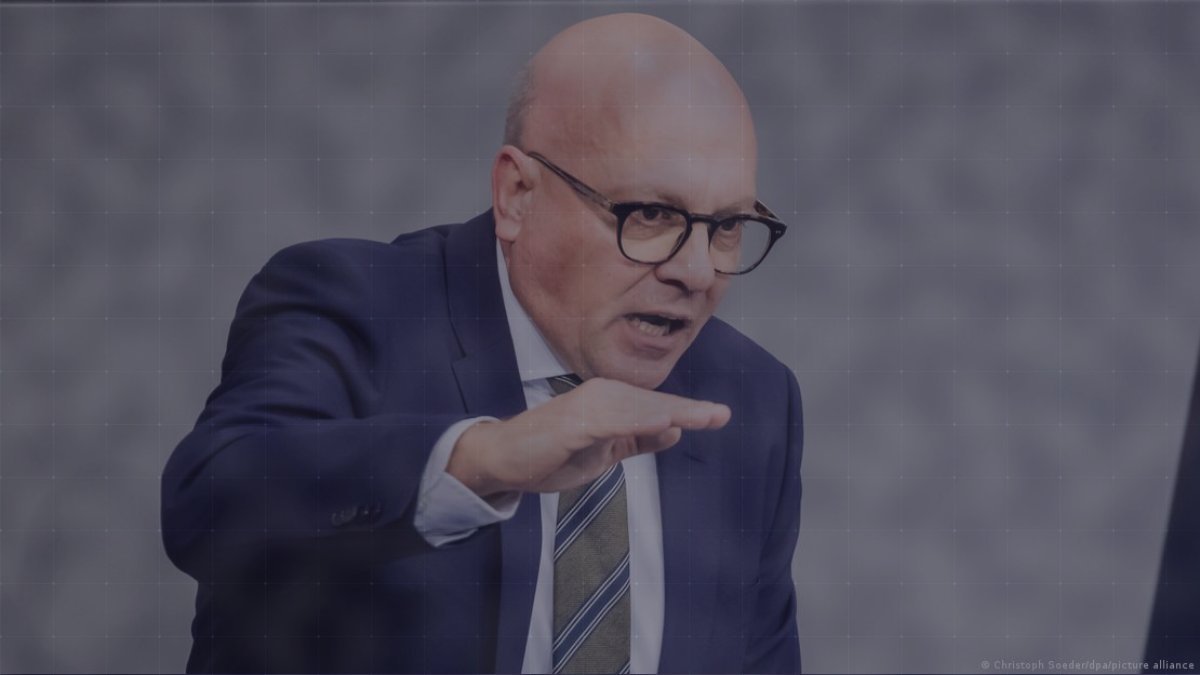
- Key Point: CDU lawmaker Alexander Throm, who speaks on domestic policy for the party’s Bundestag group, told Handelsblatt that scenes comparable to France’s must be stopped without exception; he warned that criminals from immigrant communities and far-left factions could seize the rallies.
- Key Point: Sebastian Koos, a University of Konstanz sociologist, told DW he does not anticipate German unrest on the French scale; he called the planned events registered, carefully arranged and emphatically nonviolent, while saying police must be ready for extremists.
French disorder and CDU warnings
France’s recent wave of protest started mostly peacefully before turning into serious disorder. Vehicles were set ablaze in several towns, the town hall in Limoges was burned, and officers fired tear gas in Lille, Lyon, Toulouse and other cities, where many people were arrested. French protests have continued even after a police crackdown. In Germany, politicians — above all in Chancellor Friedrich Merz’s Christian Democratic Union (CDU), a center-right party — have spent the week warning that similar images could return this weekend.
Throm, who handles domestic policy for the CDU’s Bundestag group, told the daily Handelsblatt:
"Scenes like those in France must be prevented at all costs."
He said far-left groups and criminals with immigrant backgrounds might "hijack" the demonstrations, and he pointed to Berlin in particular:
"An ominous alliance is emerging, particularly in Berlin."
Marc Henrichmann, another CDU lawmaker and the chair of the Bundestag panel that oversees the intelligence services, also raised an alarm:
"The far-left extremist scene is internationally connected and coordinated."
According to Henrichmann, violent far-left activists now cross borders to take part in looting and attacks in other countries.
A protest culture that differs from France’s
Sebastian Koos, a sociologist at the University of Konstanz who studies youth and protest movements, told DW that the events in France helped inspire the German plans but that he does not expect unrest in Germany at a comparable level. He sees important contrasts between young people in the two countries.
"Unlike in France, these protests are not driven by the same level of anger."
He went on:
"They have been planned, officially registered and carefully organized. The website, in particular, places strong emphasis on peaceful protest and repeatedly stresses a non-violent approach."
Even so, Koos did not dismiss the chance that extremist groups could use the permitted rallies to create trouble:
"It is certainly very important for the police and public authorities to be well prepared."
Education, generational fairness and the scale of the mobilization
At 19, Quentin Gärtner is a Heidelberg biotechnology student; until November last year he held the secretary-general post at the Federal Student Conference, a body that speaks for about 7.5 million school pupils in Germany. He told DW that frustration over education is a unifying force.
"What unites us is that we have run out of patience with the education system. Many young people are deeply frustrated."
He described the problems:
"The performance of German school students continues to decline, teaching positions are constantly being cut, and in many cases school buildings have seen little or no meaningful investment for years."
Gärtner linked that anger to a wider defect in representative politics in Germany and other Western democracies.
"Politicians want to win elections. They focus on the groups that matter most to them electorally rather than on the future and the long-term sustainability of their policies."
He added:
"And in our aging societies, older people and the baby boomer generation are the groups that carry the most political weight."
Opposition parties have also said they understand the concerns of younger voters. Green Party co-leader Felix Banaszak told public broadcaster ZDF:
"The intergenerational contract is no longer working. Older generations have driven the climate into a dead end."
Banaszak argued that the welfare system is nearing its limits and that rents have grown unaffordable. In his account, the state’s main gesture toward young people is the letter sent to 18-year-olds inviting them to consider military service, as Germany urgently seeks to enlarge the Bundeswehr and weighs bringing back national service.
As of Tuesday, about 134,000 people had signed up through the "Gen Z regelt" site to join Saturday’s protests. With days remaining, that total could still increase. The article was translated from German.
The coming weekend will test whether a registered, deliberately peaceful campaign can keep any violent fringe at a distance — and whether a political system tilted toward older voters can respond to the grievances that persuaded 134,000 people to sign up before the demonstrations even began.