

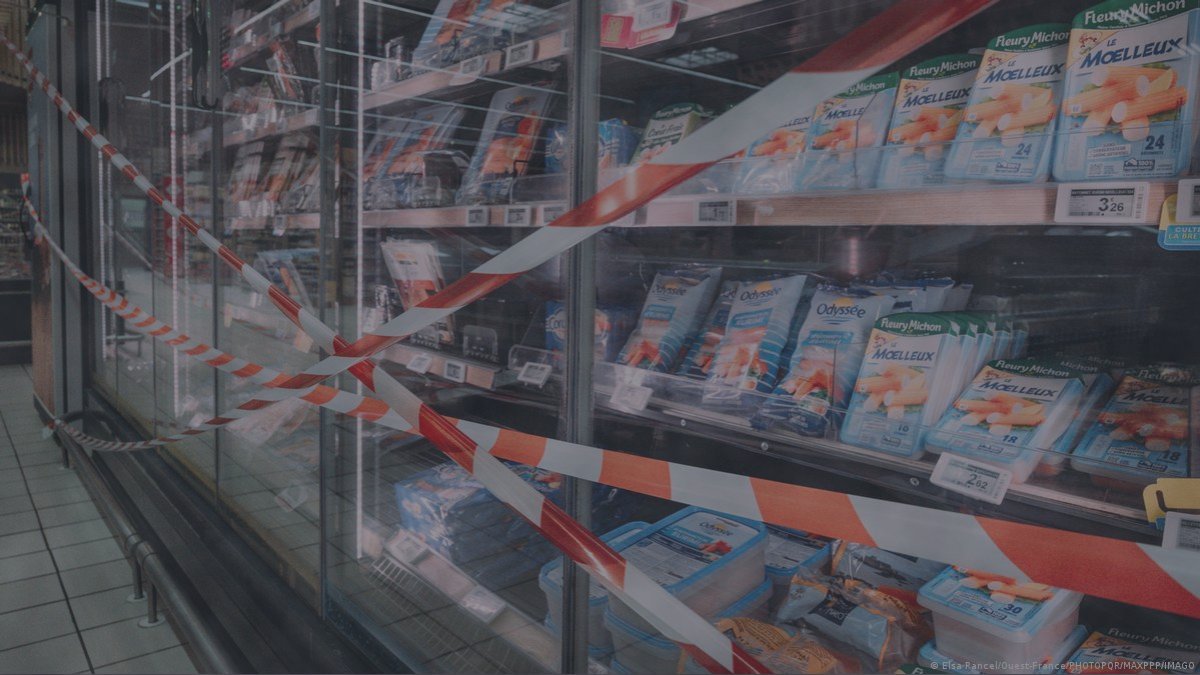
France has formally pointed the finger at Iran’s Islamic Revolutionary Guard Corps for a cyber operation that knocked out temperature controls on commercial refrigeration units in hundreds of stores across Europe, an intrusion Paris is calling without precedent. Foreign Minister Jean-Noël Barrot said the attack was organized by the IRGC, and the French government confirmed it is prosecuting the head of the group behind the operation along with two of his deputies. Paris has also summoned Iran’s ambassador over the incident and warned of consequences.
- Key Point: Barrot attributed the refrigeration hack to Iran’s Revolutionary Guards and described the operation as “unprecedented.”
- Key Point: French prosecutors are pursuing charges that include endangering the population and acting on behalf of a foreign power, naming Iran specifically.
- Key Point: The October 11 intrusion overrode temperature settings on commercial fridges in hundreds of establishments stretching from Sweden to Ireland.
- Key Point: The group blamed for the campaign, CyberAv3ngers, is also linked by London to a separate July attack and is described as affiliated with the IRGC’s electronic warfare arm.
A judicial case built around foreign interference
The legal groundwork was laid out by the Paris Judicial Tribunal, which said investigators are examining offences that put the public at risk and involve both a foreign state and a criminal network. Prosecutors said the alleged crimes were aggravated because they were carried out to serve a foreign power — Iran — and because they entailed participation in a criminal association formed to prepare an offence.
The scale of the disruption became clear in the days after October 11, when attackers seized control of the temperature settings on commercial refrigeration in hundreds of locations. Retailers from Scandinavia to the Irish Republic found themselves dealing with spoiled stock and, in some cases, discarded frozen goods. The manufacturer behind many of the affected units said a number of them were obsolete or running outdated firmware, a weakness that could have made it simpler for intruders to get in.
Britain has tied the same group, which calls itself CyberAv3ngers and is also known as Shahid Kaveh, to an attack carried out in July. According to the French government, the operation is affiliated with the IRGC’s electronic warfare arm, which specializes in breaching infrastructure. The naming of the unit and the decision to prosecute its leadership mark an escalation from technical attribution to a formal legal and diplomatic response.
“Both offences being aggravated by the circumstance of having been committed with the aim of serving a foreign power, in this case Iran—in addition to participation in a criminal association with a view to preparing a crime,” the tribunal statement said.
Europe confronts a widening hybrid campaign
The refrigeration breach is one strand of a broader wave of disruption that has unsettled governments across the continent. German electricity substations and airports have been targeted, defence-related sites in the Baltic region have come under attack, and a hoax email campaign has snarled air travel. In Copenhagen, police imposed a temporary ban on drone flights over large areas on Monday; the Danish capital’s airport was among those hit by false threats the previous week.
Those behind the hoax messages described them as “small part of what awaits Europe in the near future.” Rob Jordan, a research director at the Rusi defence and security think tank, said it is too early to establish who is behind the emails, but suggested a state actor may have set the process in motion and encouraged imitators. He pointed to strong past indications that both Iran and Russia have used secure messaging networks to pay people to carry out acts such as firebombings. “It’s least possible that whoever was responsible for the first wave of these hoaxes set ball rolling and demonstrated to people who like to cause chaos that this is something that will work,” he told reporters.
Britain is responding by deploying specialist military personnel abroad to disrupt hacking operations before they mature. Maj Gen Mike Fayers, who commands the Defence Cyber and Electromagnetic Force, said the “hunt force” is increasingly being seconded to countries across Europe and Asia. The missions, involving specially trained soldiers, sailors and aviators, are sensitive enough to require approval from Defence Secretary Wes Streeting. “Whereas historically we have defended on our territory, we are now defending ourselves forward of our own networks,” Fayers said. “We are trying to hunt for our adversaries in places where they prepare before they target UK military systems. We call them a hunt force.”
Ireland is preparing for two high-level gatherings in Dublin this week — a European Political Community summit on Thursday that will draw more than 50 heads of state and leaders of international organizations, followed the next day by an informal meeting of the EU Council. Irish Prime Minister Micheál Martin said the country’s Cyber Security Centre will form part of the security operation, describing it as the largest in the history of the state. Authorities are treating the risk of an attack or security incident as “substantial,” and the prime minister’s official spokesman said the threat is taken “extremely seriously,” with a range of operational measures in place. An investigation is under way into who sent a threatening email to the national broadcaster RTÉ, a message claimed by someone using the name “Mikhail Andropov.”
Diplomacy and deterrence collide in Paris
The accusation against Tehran lands as G7 foreign ministers meet in Paris, where Iran is expected to feature prominently in discussions. US Secretary of State Marco Rubio, making his first trip abroad since last week’s midterm elections, played down prospects for a breakthrough with Tehran. “I wouldn’t say we’re on the verge of a breakthrough,” he said, adding that Iranian demands are “simply not just unacceptable but, in some cases, outrageous and ridiculous and really not realistic.” German Foreign Minister Johann Wadephul said the ministers would focus on ensuring military escalation is avoided. “We certainly cannot afford any military escalation at this point,” he said.
The French move raises the pressure on Iran at a moment when Western capitals are already weighing how to respond to a string of hybrid incidents. By naming the IRGC’s electronic warfare arm and pursuing its leadership in court, Paris has converted a technical finding into a political and legal instrument. The immediate test will be whether other European governments follow with their own attributions and sanctions, and whether the hunt for the perpetrators moves from forensic work to coordinated disruption. With major summits scheduled in Dublin and continued talks over Iran’s nuclear program, the coming days will show whether the fridge hack becomes a turning point in how Europe confronts state-linked sabotage — or one more entry in a lengthening list.