

Tanzania’s best-known opposition politician will spend the next four years behind bars, but he will not face the death penalty. Tundu Lissu, chairman of the Chadema party, was acquitted of treason and convicted of incitement on November 6 by a three-judge panel at the High Court in Dar es Salaam, closing a trial that had gripped the country for two months. The court handed him a four-year term, one year below the maximum available for the offence.
The outcome has drawn swift criticism from abroad and from rights groups, who argue that the proceedings were politically driven from the outset. Lissu himself rejected the ruling from the dock, insisting that incitement had never been among the charges he was summoned to answer.
- Key Point: A panel led by Judge Dunstan Ndunguru, alongside Judges James Karayemaha and Ferdinand Kiwonde, found the treason charge unproven but convicted Lissu of incitement under a lesser-offence provision.
- Key Point: Lissu had spent 577 days in custody on remand, roughly 19 months, all of it on the treason count the court ultimately dismissed.
- Key Point: His lawyers filed a notice of appeal on November 9, asking the Court of Appeal to decide whether a judge may convict on an offence the accused was never formally charged with.
- Key Point: Britain and Amnesty International have called for the conviction to be quashed, citing a UN working group’s finding that his detention was arbitrary.
A charge the court says was never on the file
The case traces back to April 3, 2025, when Lissu addressed supporters in Dar es Salaam as part of Chadema’s campaign demanding constitutional and electoral reform before any national vote. He was arrested on April 9 after a rally in the southwestern town of Mbinga and transferred to the commercial capital in an operation reported to have involved excessive force. Prosecutors charged him the following day with treason under section 39(2)(d) of the Penal Code, an offence that carries a possible death sentence and is not bailable.
The state built its case on social media posts in which Lissu urged Tanzanians to boycott the October 2025 election over fears of malpractice, and on his slogan, “No Reforms, No Election.” The judges concluded that prosecutors had failed to establish the intent that treason requires. They then turned to section 319 of the Criminal Procedure Act, which permits a court to convict for a lesser offence where the evidence supports it, and found him guilty under section 390 of the Penal Code, which covers soliciting or inciting another person to commit an offence whether or not the incitement succeeds. Because that provision sets no penalty of its own, the court applied section 35, allowing up to five years in prison, a fine, or both.
Judge Ndunguru noted that some prosecution witnesses said Lissu’s remarks had moved them to join efforts to disrupt the vote. State Attorney Nassor Katuga had pressed for a severe, deterrent sentence, arguing that incitement damages peace, property and economic activity. The court weighed a fine before settling on four years, citing his status as a first offender and his diabetes, and reasoning that his statements had encouraged disruption and infringed other citizens’ right to vote.
The offence of incitement is one that you, honourable judges, have manufactured; you have created an offence that did not exist, and (you) have done so on political directives.
Lissu, a lawyer who represented himself, told the court he had spent his time on remand under the shadow of a possible death sentence. His defence team argues the sentence makes no allowance for that period, and it remains unclear publicly whether the 577 days will be deducted.
An appeal that tests the limits of judicial substitution
The notice of appeal, dated November 7 and stamped as filed two days later, challenges the judgment in Criminal Session Case No. 000019605 of 2025. It was signed by Rugemeleza Nshala, Chadema’s chief legal counsel, who stated he was retained only to prepare the document. It does not yet set out grounds, which will follow once the defence obtains the trial record, and no hearing date has been fixed.
Filing the notice does not suspend the sentence or secure Lissu’s release. That would require bail pending appeal, which he requested at sentencing and which no court has announced. Fellow advocate Paul Kisabo said the legal team had begun the process and remained convinced of Lissu’s innocence.
The maximum penalty for incitement is five years.
Nshala made that point to reporters at Chadema’s Mikocheni headquarters, adding that Lissu had already served a year and seven months before receiving four more. The appeal asks the Court of Appeal to settle a question with implications far beyond one defendant: whether a trial court that finds a capital charge unproven may substitute a lesser offence the accused was never formally charged with.
Election violence, a disputed mandate and pressure from abroad
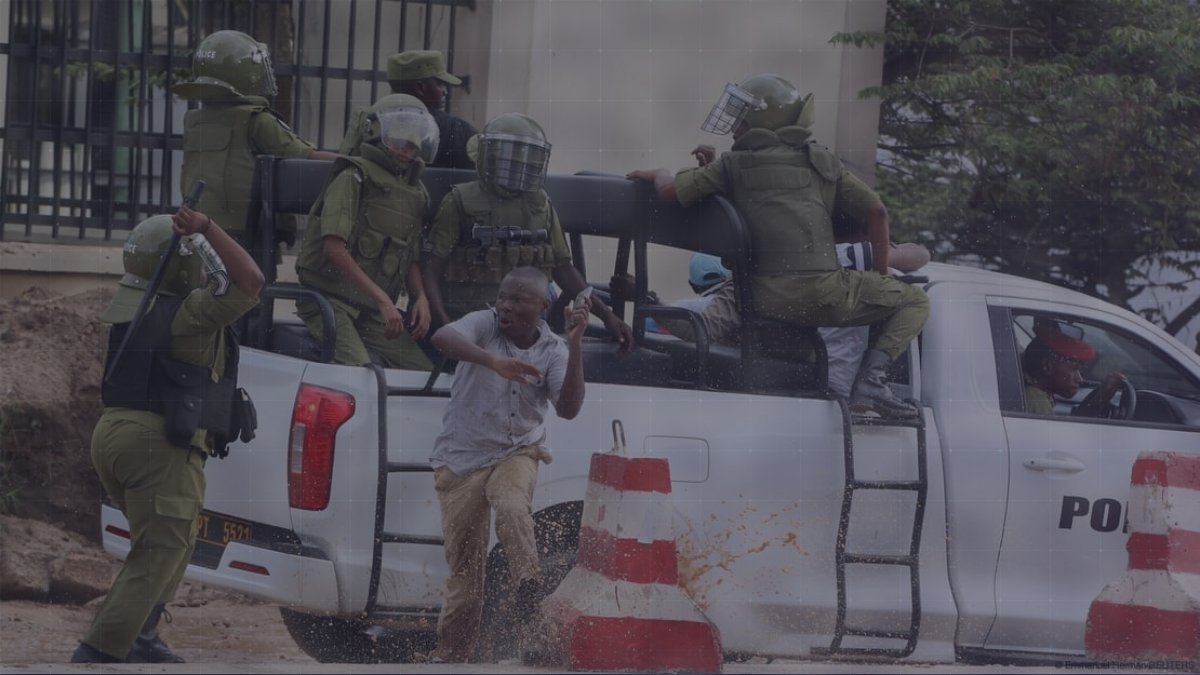
Lissu’s detention kept him out of the October 2025 general election, which Chadema boycotted. The vote was marred by violence on a scale rarely seen in Tanzania, with security forces using live ammunition on protesters, and it was followed by a nationwide internet shutdown and a curfew. President Samia Suluhu Hassan was declared the winner with 98 percent of the vote.
Francis Ibrahim, an independent political analyst in Dar es Salaam, argued that accountability should reach from the security forces who overstepped their mandate to those who financed and organized the crackdown. He also read the dropped treason count as a possible gesture toward de-escalation, suggesting Lissu might be released early to take part in talks on a new constitution. Yet when the president met representatives of more than a dozen parties in late July to discuss reconciliation and constitutional reform, Chadema was pointedly excluded.
Ruqaya Mohammed, national deputy secretary of the youth wing of the opposition ACT-Wazalendo party, said the country is entering a darker phase of its political life and called for open dialogue on legal and electoral reform. A musician and human rights advocate who spoke only on condition of anonymity described a climate of fear outside the courthouse and said the four-year term was far from the worst outcome, given that Lissu is still alive.
International reaction has been sharp. Britain’s Minister for Africa and International Development, Kirsty McNeill, cited a UN Working Group on Arbitrary Detention report concluding that Lissu’s detention was arbitrary and lacked sufficient legal basis, and reminded Tanzania of its obligations under the International Covenant on Civil and Political Rights. London backed the Presidential Commission of Inquiry’s view that reconciliation is essential after the election violence. Amnesty International’s Tigere Chagutah called the verdict the culmination of a deeply flawed process, pointing to denial of confidential access to lawyers, cut live broadcasts and the arrest and deportation of international observers. The group says Lissu was held in a death row cell with limited access to religious services, and it wants the conviction quashed. Anna Henga of the International Federation for Human Rights described numerous irregularities amounting to political persecution.
If upheld, the sentence would keep Lissu, 58, imprisoned well into the next electoral cycle, removing the ruling party’s most persistent critic from public life at a moment when the government is formally committed to reconciliation. The appeal will therefore be watched as a test of whether Tanzania’s courts can rein in a prosecution that outside observers regard as politically motivated, and of whether the promised dialogue on constitutional reform will include the party the president has so far kept at arm’s length.