

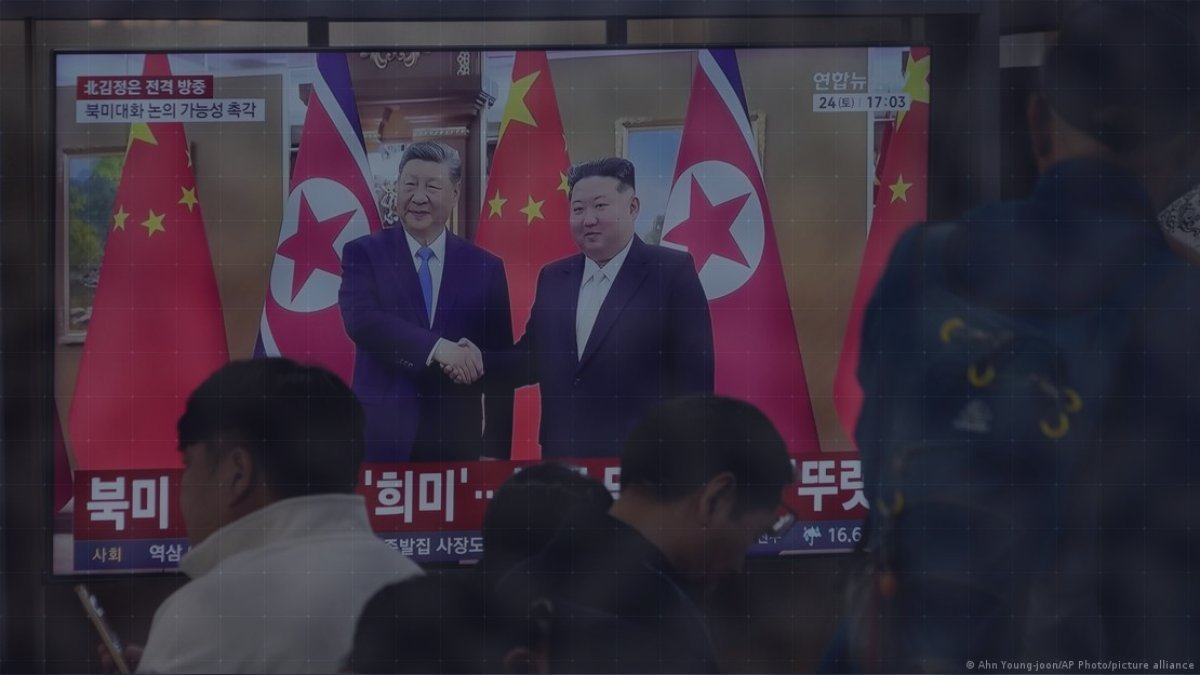
Kim Jong Un crossed into China on Saturday through the New Yalu River Bridge, reaching Dandong, the border city facing North Korea. The four-lane span brought the North Korean leader into Chinese territory, and state media there reported that he met Wang Huning, Beijing’s top political adviser. Xinhua said Wang carried a message from President Xi Jinping.
greetings and best wishes to Kim
Both governments used the moment to promise tighter coordination and broader exchanges, with the new crossing as their backdrop.
- Bridge opening: Kim traveled to Dandong over the New Yalu River Bridge, which joins the two nations and remained idle after its 2014 completion. The link began operating about a week ago, following 12 years in which North Korea had not finished the roads and customs buildings required on its side.
- Wang meeting: Wang Huning met Kim, and Chinese state media said both sides agreed to enlarge contacts between their publics and to increase commerce and economic cooperation via the new bridge.
- Calendar: Kim’s arrival falls on the date Beijing marks its decision to join the Korean War and comes before a major Communist Party gathering in Beijing on Monday. It remains unknown whether Kim will attend memorial events.
- Economic weight: China is still North Korea’s biggest trade partner and a principal supplier of diplomatic, economic and political backing to the isolated, nuclear-armed state, though the relationship has had difficult periods.
A span that waited years to function
The bridge has four lanes and was finished in 2014. It stood unused for 12 years because the North Korean side lacked the roads and customs facilities required for traffic. Its formal opening came about a week ago, a development that signals deeper economic ties between the neighbors.
Trade, diplomacy and the Russian comparison
China’s economic role in North Korea is central. Beijing is Pyongyang’s biggest trade partner and a major provider of diplomatic backing, economic aid and political support to a country that is isolated and possesses nuclear weapons. Their relationship has had rough moments.
strengthen strategic communication and cooperation to safeguard their sovereignty, security and development interests
Chinese state media reported that pledge alongside a commitment to broaden contacts between ordinary people and to increase commerce through the new bridge. The crossing’s debut occurred barely more than a month after North Korea and Russia opened their first road bridge, which Pyongyang presented as proof of closer relations. Analysts say North Korea’s trade with Russia is mostly about military supplies, whereas trade with China can furnish goods needed to build up the civilian economy.
War memory, party timing and what comes next
Kim’s visit coincides with a significant date in Chinese politics. It matches the anniversary of China’s decision to enter the Korean War. It was unclear whether Kim would take part in commemorations. In China, the 1950-53 conflict is remembered by a name that emphasizes resisting the United States and aiding Korea:
War to Resist US Aggression and Aid Korea
In the conflict that ran from 1950 to 1953, Chinese forces joined North Korea in battle against South Korea and a United Nations contingent commanded by the United States. Kim’s trip also precedes a Monday meeting of Xi and other senior officials for the fifth plenary session of the party’s Central Committee, a key gathering of the ruling party.
Before Xi’s June 2019 visit to Pyongyang, no Chinese leader had gone there for 14 years.
The visit uses a new piece of infrastructure to highlight North Korea’s ties with China while Pyongyang also cultivates closer relations with Russia. The bridge offers another trade route that could serve civilian needs, not only military supplies. China’s readiness to open the crossing and receive Kim with a senior official indicates that Beijing continues to value its leverage and connection with Pyongyang.
At the same time, the trip is timed around Chinese political symbols: the war anniversary and the party plenum. Kim’s presence near Dandong, and the uncertainty over whether he will appear at memorial events, keeps attention on how far Beijing and Pyongyang will turn warm words into practical cooperation. Pledges on sovereignty, security and development interests, along with expanded exchanges, will matter only if they produce traffic, customs activity and trade on the new bridge.
For now, the clear signal is that North Korea’s relationship with China remains central even as Moscow draws closer. The New Yalu River Bridge, idle for more than a decade, has become the stage for that message. Zac Crellin edited the report.